

The first rule of scuba diving is never hold your breath, but the second is never dive alone. Adaptive diving is fundamentally a social sport. That sense of community is essential to recovery for injured veterans. Injuries sustained while on active duty can be isolating. Both visible and invisible injuries can remove service members from the military community they’ve grown to depend on, leaving them alone and depressed.
Moreover, research shows prolonged loneliness can be as detrimental to a veteran’s health as smoking 15 cigarettes per day. However, adaptive diving offers a simple, effective way to help veterans rebuild their social circle and return to a community. Read on to learn all about how adaptive diving helps participants fight isolation and return to society.
Adaptive Diving and the Buddy System

Teamwork starts on the first day of in-water training. The academic portions of a scuba diving certification course are completed individually, but the water work is a team event. Before splashing in, each diver is assigned a buddy. Buddies stick together throughout the dive and learn how to help each other solve diving problems underwater. These techniques cover everything from muscle cramps to out-of-air emergencies.
Over the course of 5 pool dives and 4 dives in open water, members of each buddy team learn to rely on one another. They understand that once they slip beneath the waves, they are each responsible for the other. By the end of the course, it’s common for buddy teams who started out as total strangers to be fast friends. Many will continue to dive together for years to come.
Building Community From the Water Up
Adaptive divers experience this same bonding whether their buddies are other adaptive divers or more average dive students. However, this sense of companionship can be especially profound for injured veterans. Community is a fundamental facet of military life. During a deployment, warfighters must trust their lives to their team members. These stakes create deep bonds that become foundational to the individual’s sense of identity.
However, traumatic injury often severs these bonds. Wounds like the loss of a limb or a TBI remove a service member from the community they depended on. This leads to feelings of isolation, uselessness, or even depression.
However, adaptive diving is uniquely positioned to return what was lost. Since community is fundamental to scuba diving, injured veterans are returned to a community with a familiar expectation—to support and protect their buddy.
One of the Team
Many personal challenges posed by physical or cognitive injuries on land are not an issue underwater. A missing limb does not impact mobility. Anxiety from PTSD is reduced to negligible levels. Thus, participants soon discover that the injuries that removed them from active military service are no hindrance on a dive. They are as capable as the average diver, and sometimes more so.
Importantly, the veteran’s dive buddy sees that too. This acknowledgment of mutual skill and the need to depend on one another builds rapid trust. Within a dive or two, the injured veteran finds themselves back in a community where they are not only a member but a contributing member.
Adaptive Diving After Training
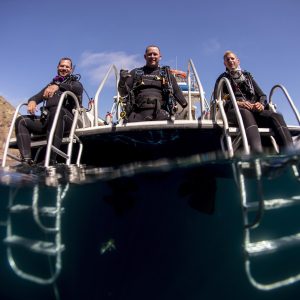 Participants must continue diving after certification to continue experiencing these positive social effects. The social aspects of scuba diving only grow stronger once our participants become certified. With their Open Water Diver certification (aka their PADI card), they now have all the qualifications necessary to dive independently with a buddy all over the world. This provides entrance to the international diving community and allows them to start scuba diving with their local dive center.
Dive centers provide a natural hub for local dive communities to flourish. These shops run clubs, events, and trips for which Open Water Diver certification is the only prerequisite. Adaptive divers easily integrate into these social environments, which provide a supportive, active local community.
Dive travel is another powerful tool to reinforce the social bonds formed by diving. Dive trips, led by dive centers, become tight-knit communities strengthened by their shared experience. To help replicate this experience on an easily repeatable scale, Patriots for Disabled Divers partners with the Georgia Aquarium to run dive trips where participants dive their whale shark tank. This enormous tank offers the experience of diving in an exotic destination without the need for passports or extended travel.
Help Build Healing Communities Today
Unfortunately, it is often those who need adaptive diving the most who can least afford it. That’s why Patriots for Disabled Divers is committed to offering all our programming free of charge to our injured veterans. But to do that, we need your help. On average, diver certification costs $1,000 per diver for a lifetime certification. Likewise, diver socialization trips like diving the Georgia Aquarium can cost $500 or more per diver. We rely on donations from compassionate supporters like yourself to ensure our programs remain accessible to those who need them most. Please show your support by donating today. With your help, we can improve the lives of those who sacrificed so much for our country.