

There’s no denying that stress and anxiety are on the rise. A 2024 study conducted by Yale indicated that 7.9% of veterans tested positive for generalized anxiety disorder compared to the national average of 2.9%. Unfortunately, that isn’t surprising considering the trauma many injured veterans have endured in service to our country.
In light of that, therapies that promote relaxation and foster a sense of community have never been more critical. In fact, a 2023 study in the Journal of Family Medicine and Community Health found that an increased sense of community reduced symptoms of anxiety and stress. Scuba diving offers a potential solution for our injured veterans. It promotes both generalized relaxation and increased community involvement. These two factors combined make it an outstanding therapy for veterans living with anxiety disorders. Read on to learn more about how scuba diving helps reduce stress and anxiety.
Physical Stress Reduction
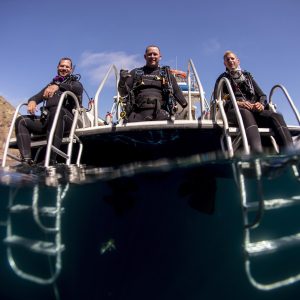 Scuba diving (specifically, adaptive diving) naturally promotes physical and mental well-being. Physically, diving offers zero-impact resistance training with unparalleled mobility. The rhythmic breathing required for scuba diving has a calming effect on the body that promotes stress reduction. It is a sport that naturally improves physical and emotional health.
A Community Solution to Anxiety
Beyond the physiological benefits, scuba diving builds supportive communities and life-long friendships. Diving takes people outside their comfort zone and puts them in a world they may have never experienced. The alien nature of this environment removes pre-existing social barriers and creates a level playing field between dive buddies. On equal ground and with the same goal, teams of dive buddies work together to safely explore the dive site on each and every dive.
Friendships Forged Through Stress Management
Scuba diving is an extreme sport, and there is an element of danger the divers experience. After all, none are able to breathe water. However, this danger is reduced and managed by teamwork between dive buddies. Moreover, that element of risk is essential. Even though the threat is minimal, the veterans feel it and experience the sense of having overcome it together. This moment of surfacing from a dive, having conquered the challenges as a team, forges powerful friendships.
That’s one dive. Now, multiply that experience over many iterations, where each injured veteran dives with several different dive buddies. A network of solid camaraderie soon blossoms, and a community forms.
 PFDD’s Campaign Against Anxiety
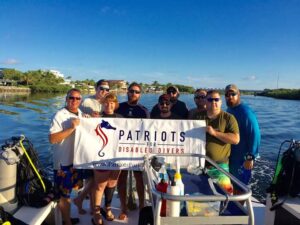
As the veterans on our board of directors can attest, PFDD is no stranger to the stress-reducing qualities of scuba diving. Indeed, reduced symptoms of stress, anxiety, and depression are some of the most reported benefits among our participants. This increase in mental health and well-being has enormous impacts on both the injured veteran and their loved ones. Anxiety disorders can be isolating. The hypervigilance that often accompanies them makes it hard to be present with one’s family and friends. PFDD’s adaptive diving programs make a world of difference for our participants. One grateful spouse wrote, “You saved my husband’s life!”
To reduce anxiety further, we offer our adaptive diving programs to qualifying injured veterans at no cost. After all, the therapeutic benefits of scuba diving should be open to all injured veterans regardless of financial status. You can help us realize this dream by donating to PFDD today. Our veterans sacrificed so much for our country. Let’s provide them the tools to heal. To learn more about how diving reduces anxiety or to donate, contact us online or via email at jeff@patriotsfordisableddivers.org.